السبت، 12 مارس 2011

Pack Journalism Promotes War on Libya


by Stephen Lendman

America's major media never met an imperial war it didn't love and promote, never mind how lawless, mindless, destructive and counterproductive.

Despite Washington already bogged down in two losing ones, Obama's heading for another on Libya, the media pack in the lead clamoring for it, perhaps by "shock and awe," supplemented by special forces death squads on the ground recruiting, inciting, and arming opposition elements.

Notably favoring intervention, a New York Times February 24 editorial headlined, "Stopping Qaffafi," saying:

Unless he's stopped, he'll "slaughter hundreds or even thousands of his own people in his desperation to hang on to power."

Where's the Times outrage over millions Washington slaughtered, hundreds more killed daily, its ties to global despots, its funding and support for Israeli brutality against Palestinians, and its imperial insanity to achieve unchallengeable global dominance, no matter how many corpses it takes to do it.

Nonetheless, The Times hailed Libyan courage, asking for more Western support, implying the belligerent kind. "Colonel Qaddafi and his henchmen have to be told in credible and very specific terms the price they will pay for any more killing. They need to start paying now. (The) longer the world temporizes, the more people die."

On February 28, The Times editorial headlined, "Qaddafi's Crimes and Fantasies," saying:

His "crimes continue to mount. Rebel commanders said (his) warplanes bombed rebel-controlled areas in the eastern part of the country." However, Russian satellite imagery showed no bombing evidence or destruction on the ground. So much for The Times or other major media credibility, reporting the same unverified accounts.

On March 8, The Times headlined, "Washington's Options on Libya," saying:

"....some way must be found to support Libya's uprising and stop (Gaddafi) from slaughtering his people....It would be a disaster if (he) managed to cling to power by butchering his own people."

Indisputably, Gaddafi is a despot, but he didn't initiate conflict. Western powers did, sending in covert intelligence and special forces to incite, arm and support it.

Britain's Prime Minister David Cameron admitted that UK commandos were in Benghazi. So did Foreign Secretary William Hague, telling Parliament it was "a serious misunderstanding," drawing laughs from opposition benches.

Channel 4 News aired a video with him saying intelligence and elite special forces were on "a diplomatic mission" to make contact with rebel elements. However, he left unexplained why they arrived secretly by helicopter at 2AM with no advance warning. In fact, the Cameron/Hague "misunderstanding" came to enlist and incite violence along with US special forces there for the same purpose. Commandos are trained killers, not diplomats.

As a result, Gaddafi responded in self-defense. Washington and NATO bear full responsibility for growing daily casualties. Blood's on their hands. It's their cross to bear, costing many Libyan lives.

It hardly matters for greater stakes, including:

-- replacing one despot with another;

-- preventing democratization;

-- colonizing Libya;

-- controlling its oil, gas and other resources;

-- privatizing its state industries, handing them over to Western interests;

-- perhaps balkanizing the country like Yugoslavia and Iraq - in other words, effectively destroying it for profit and control, as well as using it as a platform to intimidate other regional states to comply fully with Western diktats - or else; and

-- exploiting its people ruthlessly as serf labor.

It's a familiar Western scheme, justified as "humanitarian intervention," what America, above all, doesn't give a damn about and never did, seeking only imperial dominance, no matter how much death and destruction it takes to get it. "Operation Libya" had antecedents, notably in Yugoslavia and Iraq, two previous countries Western powers destroyed and now exploit.

International Law on Self-Defense and External Intervention - Humanitarian or Otherwise

International law authorizes Gaddafi to respond in self-defense. Article 51 of the UN Charter's Chapter VII: Action with Respect to Threats to the Peace, Breaches of the Peace, and Acts of Aggression" states:

"Nothing in the present Charter shall impair the inherent right of individual or collective self-defense if an armed attack occurs against a Member of the United Nations, until the Security Council has taken measures necessary to maintain international peace and security. Measures taken by Members in the exercise of this right of self-defense shall be immediately reported to the Security Council and shall not in any way affect the authority and responsibility of the Security Council under the present Charter to take at any time such action as it deems necessary in order to maintain or restore international peace and security."

In other words, self-defense is permissible. Moreover, the UN Charter explains under what conditions intervention, violence and coercion (by one state against another) are justified. Article 2(3) and Article 33(1) require peaceful settlement of international disputes. Article 2(4) prohibits force or its threatened use, including no-fly zones that are acts of war.

In addition, Articles 2(3), 2(4), and 33 absolutely prohibit any unilateral or other external threat or use of force not specifically allowed under Article 51 or otherwise authorized by the Security Council.

Three General Assembly resolutions also prohibit non-consensual belligerent intervention, including:

-- the 1965 Declaration on the Inadmissibility of Intervention in the Domestic Affairs of States and the Protection of Their Independence and Sovereignty;

-- the 1970 Declaration on Principles of International Law Concerning Friendly Relations and Cooperation among States in Accordance with the Charter of the United Nations; and

-- the 1974 Definition of Aggression.

Under no circumstances, with no exceptions, may one nation, NATO, or other combination of nations intervene against another without specific Security Council authorization. Doing so is illegal aggression, a lawless act of war. Washington and NATO have already initiated conflict. Gaddafi, or any other democrat or despot, legally may respond in self-defense as he's doing, love him or hate him. By law, he's justified.

Yet The Times urges NATO to expand "its air surveillance over Libya (and) share relevant information with the rebels." No matter that violating its air space is illegal and aggressive. The Times also wants pressure put on "Qaddafi and his cronies to cede power," by what authority it didn't say because there is none. No matter because in Times-think, "(i)t would be a disaster if (he) managed to cling to power by butchering his own people."

Hyperbole, misinformation, imperial support, and disdain for international and US laws as well as democratic values are Times specialties - on display backing Washington's attempt to destroy, colonize and exploit another country, no matter the corpse count to do it.

In his March 9 commentary, longtime insider Bob Chapman said the following:

"....as we pointed out after the Tunisian episode, this was the beginning of CIA, MI6 and Mossad planned activities in the Middle East. As usual there were several objectives. The first was a distraction to cover up (Western) financial troubles....The second was to remove Mubarak from his dictatorial position, because (he refused) to participate and agree to an invasion of Iran and to cause chaos in the region, so that (Iranian allies) would not give it assistance in the event of war."

"There was also the matter of controlling Libya's oil and toppling its dictator Gaddafi....From behind the scenes, (new leadership will emerge) tied to the CIA, MI6 and the Mossad. (These plans) have been in the works for years." Unrest will continue. "A solution will be found for Libya, and the west hopes its puppet (Saudi) regime stays in place." If disruption occurs there, America will intervene. Turmoil will continue for some time. "It won't take long for Mr. Gaddafi to be deposed and sent on his way," perhaps by US troops.

More Major Media War Endorsements

With total editorial control, Murdoch's Wall Street Journal aggressively backs imperial wars, notably now against Libya. On February 23, it editorial headlined, "Liberating Libya," saying:

"The US and Europe should help Libyans overthrow the Gadhafi regime," replacing him, of course, with a Western favored despot, ceding control to imperial interests.

On March 6, the Journal headlined, "Obama's Libyan Abdication," asking:

"Will the US let Gadhafi slaughter his way back to power? The greatest danger now to US interests - and to Obama's political standing - would be for (him) to regain control....isolated and dangerous (he'll) likely (abet) terrorists," hyperbole exceeding The New York Times and most other corporate sources.

Not far behind, a February 21 Washington Post editorial screamed, "Moammar Gaddafi must pay for his atrocities," calling them "genocide." It was the same deception used before, including against Slobodan Milosevic to justify NATO's punishing 1999 illegal aggression to complete its long-planned Yugoslavia balkanization, defended then as "humanitarian intervention," no matter the vast destruction and loss of lives it caused.

The Post's resident zealot, Charles Krauthammer, called Gaddafi "a capricious killer" in his March 4 "Baghdad to Benghazi" article, saying he's "delusional, unstable and crazy."

On March 8, the Post's Marc Thiessen headlined, "Apply the Reagan Doctrine in Libya," by arming opposition elements, and inciting violence to topple Gaddafi the way Reagan operated in Afghanistan against the Soviet Union and Central America, notably against the Nicaraguan Sandinistas and FMLN in El Salvador, killing countless tens of thousands in the process, a record airbrushed from official history, calling imperial slaughter "liberation."

Arming Libya's Opposition

On March 7, London Independent writer Robert Fisk headlined, "America's secret plan to arm Libya's rebels," saying:

Washington asked "Saudi Arabia (to) supply weapons to the rebels in Benghazi." In the 1980s, Saudis helped arm Mujahideen fighters in Afghanistan and Contra forces in Central America. Asking Saudi help lets Washington deny involvement, perhaps impossible with Fisk breaking the news. He also said "US Awacs surveillance aircraft have been flying around Libya" for days, violating its air space illegally.

Moreover, he noted an "Arab awakening, the demand for democracy in North Africa, the Shia revolt, and the rising against Gaddafi become entangled in the space of just a few hours with US (UK, and NATO) priorities in the region." They augur no good for Libyans for sure.

A Final Comment

At times, Al Jazeera sounds like BBC, falling short of what viewers deserve. On February 18, Professor As'ad AbuKhalil's Angry Arab News Service discussed its coverage, saying:

"I am seething. The coverage of Aljazeera Arabic has become too blatantly politically biased for my taste. They protect their allies and friends and go intensely after the rivals and enemies of Qatar (where it's based) like the regime of Hosni Mubarak."

When GCC countries "decided to back the Bahrain monarchy, Aljazeera quickly reflected that. It is not a story anymore. Aljazeera is extensively covering Libya and Yemen now: not close allies of Qatar. If Mubarak was a member of the GCC, he would have been protected by Aljazeera."

Nonetheless, its service is vastly superior to US corporate news, offering entirely propaganda, sanitized reports and infotainment, a worthless mix to be avoided and condemned.

Reaching 40 million viewers, The New York Times called Al Jazeera "the bete noire" of Arab governments (shaping) popular rage against oppressive American-backed Arab governments (and against Israel) ever since its (1996) founding."

In their recent study on "How Al Jazeera Shapes Political Identities," Erik Nisbet and Teresa Myers found that exposure to Arabic media weakens national identities and strengthens Muslim and Arab ones.

Asked how it affects Middle East protests, Nisbet said:

"In the short term, the Pan-Muslim and Pan-Arab narratives typically embedded in Al Jazeera content, in combination with growing Pan-Muslim and Pan-Arab identification among Arab audiences, most likely facilitate the contagion begun by the Tunisian revolt."

The long-term implications for US foreign policy are also significant, posing "a serious challenge for Egyptian relations with the United States and Israel." Perhaps also for America's regional agenda. The "greater political liberalization combined with the growth of transnational political identification may challenge the United States to enact foreign policy within a regional context dominated by transnational political identities whose interests may be more opposed, or at least less amenable, to US foreign policy goals compared to state-centric identities."

Anything weakening Washington's dominance anywhere is important. Hopefully, Al Jazeera will promote and encourage it by more forcefully opposing imperial intervention, especially by belligerence and occupation.
That would make its service invaluable.

الخميس، 10 مارس 2011

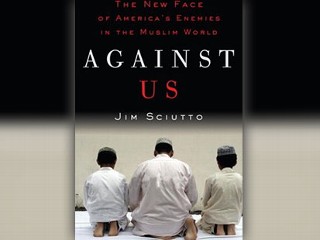
Excerpt: "Against Us" by Jim Sciutto


Sept. 11, 2008

Jim Sciutto, a foreign correspondent for ABC News, examines the sources and repercussions of anti-American sentiment in the Middle East, the new face of terrorism and options for the future

From firsthand experience and intimate interviews, Sciutto presents an engrossing narrative of terrifying events and inspiring hope.

Introduction
For five years, I've lived in Notting Hill— home to fashion boutiques, gourmet delicatessens, Park Avenue rents, and half a dozen guys planning for martyrdom. My neighbors are terrorists. I found out the first time in July 2005. After attempting and failing to blow themselves up on the London subway, three young British Muslims were captured in an apartment just down the street from me and right around the corner from the Travel Book Shop, where Hugh Grant's character worked in the movie Notting Hill. In perfect Notting Hill style, I'd sped by their place on my Vespa coming back from the gym just before the police swooped in. When the ABC desk called me with the news, I went to the scene still wearing my sneakers and sweats.
The story quickly burst the posh, hip, and safe bubble I had created for myself in London. Through all the wars and terror attacks overseas, I had imagined my neighborhood as a terror-free zone. Standing there on the corner of Lancaster and Portobello Roads that morning, I could see my favorite place for brunch, my favorite Italian restaurant, and my gym. It was like finding out that the next nineteen hijackers were living in the West Village.
London's collective sense of security had already been shattered two weeks earlier, when four other British men detonated bombs on three subway trains and a bus across the capital. Those attackers had been successful, killing ?fty-two people and themselves. As an American, I marveled at Britain's calm. London was shocked but not frozen. The buses and trains started running again almost immediately. Friends kept their dinner dates that night. Londoners proudly recalled the Second World War: We survived the blitz, we can survive this. But this time the threat came from home. Britain's own people were killing their fellow citizens. And these were good British boys, with jobs, families, favorite soccer teams, and unmistakably British accents

There would be other chilling reminders of this threat every few months. In August 2006, a plot was uncovered in Waltham Forest, East London, to blow up half a dozen airliners over the Atlantic using chemicals carried on board in soda bottles. If the alleged planners had been successful, they would have killed thousands: a 9/11 over the sea. In February 2007, Scotland Yard foiled a plan in Birmingham to kidnap and behead British Muslim soldiers returning from Iraq and Afghanistan. Several newspapers shared a single headline for the story: baghdad comes to birmingham. Each plot seemed more sinister than the last. In July 2007, two men tried to detonate car bombs outside two London nightclubs. When the bombs failed, they drove ten hours to Scotland to set themselves on ?re outside the departure terminal at Glasgow International Airport. Like the Birmingham suspects, they had intended to bring Iraqi-like violence home to the British people. But this conspiracy had a new twist: the attackers were doctors. And they were my neighbors as well. Two of them had addresses just down the street from me, again, in idyllic Notting Hill.
What worried me was that the hate—against Britain, against America, against the West (they make little distinction)—had become a part of the fabric of everyday life. In early 2002, I had embarked on an educational tour of the Arab World as a foreign correspondent for ABC News. After 9/11, I knew we had dangerous enemies in the region. But they were, I thought, easily identi?able: terrorists, radical imams, in?ltrators from faraway places. One hundred assignments later, from the Caucasus in the north, down through Afghanistan and Iran, the Persian Gulf, and into the Middle East, I was changed, even ?oored. In Afghanistan and Jordan I'd met Al-Qaeda ?ghters who told me it was their dream to kill me. That was no surprise. But for everyone from Egyptian democracy activists to Iraqis who had once supported the U.S. invasion to "pro-western" Lebanese lawmakers, America seemed to have perfected some sort of perverse art in alienating people.

I'd already spent several years in Asia after college, so I'd learned to shed any conceit that Americans were always, or even usually, perceived as the good guys. People in many countries can remember a time when they were up and we were down, and long for history to repeat itself. I also knew that anti-Americanism is a convenient tool for governments. The United States as foreign menace is a nice distraction from poverty, corruption, and utter failure at home. Still, among Muslims there is something distinct and demoralizing about their anti-American sentiment. Many Muslims I've met have long believed that the United States is trying to control their lives, nearly always with the worst intentions. They don't blame me personally. They usually make the distinction between the American people and their politicians (though that distinction is fading). But they do treat me as America's of?cial spokesman, or as its defense attorney in an international court of public opinion where the facts as we see them don't matter much. Here, the September 11 attacks were a joint plot of the CIA and Israeli intelligence. Violence in Iraq is not failed policy, but a deliberate American plan to occupy Muslim land and steal oil. The Israel-Lebanon War was a brazen attempt by the United States and Israel to send a violent message to Muslims by killing Lebanese civilians. Such assumptions extend even to native-born European Muslims. Among many British Muslims, the July 7 London subway bombers weren't murderers, but innocent young men framed by the police (though they'll often add that Britain deserved the attacks anyway).

After seven years of reporting on this subject, I came to an unsettling truth: The Al-Qaeda-inspired view of an evil America bent on destroying Islam has moved from the fringe to the mainstream. Today, America's enemies are not the wild-eyed radicals I had imagined, but are often moderates—and many of those whom we thought were our friends are now some of our most virulent detractors.
Positive views of America—already anemic—have grown slimmer and slimmer. A 2007 poll by the U.S.-based Program on International Policy Attitudes in four Muslim countries (Egypt, Morocco, Pakistan, and Indonesia) found that 79 percent believe the United States seeks to "weaken and divide the Islamic world." Strong majorities (64 percent on average) even believe it is a U.S. goal to "spread Christianity in the region."
Between 2002 and 2007, the Pew Global Attitudes Project found that the number of people who rated the United States favorably declined in twenty-six of thirty-three countries. By 2007, in nine countries less than 30 percent of the population rated the United States positively. Eight of them were predominantly Muslim: Turkey, Pakistan, Palestine, Morocco, Jordan, Egypt, Malaysia, and Indonesia (Argentina was the odd man out).
In more than thirty years as a pollster, Andrew Kohut, the president and director of the Pew Research Center, has said he could find no frame of reference for the current decline.
"We don't have any experience with this. We never got the breadth of discontent with America as we have now," he said. "In other countries, it's disappointment, resentment, envy. Among Muslims, it ranges from strong dislike to hatred."
Increasingly, negative views of America as a country are extending to the American people. Another Pew poll found that fewer than one-third of Egyptians, Moroccans, Palestinians, Pakistanis, and Turks have a favorable view of Americans, characterizing us as greedy, violent, and immoral.
Just after 9/11, President Bush declared nations around the world "with us or against us" in the war on terror. Now those in the Muslim world are against us in greater numbers than ever before—and they have a new face. A remarkable variety of people—normal people—believe the United States intentionally obstructs rather than promotes progress. Al-Qaeda may be losing the military campaign, but, in considerable ways, it is winning the ideological war. "Al-Qaeda's ideological claims now have credibility, that the West is waging war against Islam," said Fawaz Gerges, a longtime Middle East analyst. "There is a crusading spirit in the West. It helps shape the Muslim view that the U.S. is trying to control their lives. The U.S. is convinced Al-Qaeda is an evildoer. Al-Qaeda has convinced Muslims that the U.S. is an evildoer too."

As an American, I found myself eager to raise the alarm at how deeply our image has been damaged and search for ways to repair it. I found some of the answers by getting to know some of the people who see every event of their lives affected—stage-managed, even—by the United States. For Iraqis, every car bombing has an American imprint. For Palestinians, it's every foot of the wall Israel has built along the border of the West Bank. For Afghans, it's the electricity that's still off most of the day. We have no connection to them, but they feel every connection to us. Their anger is as real as their humanity. These people aren't monsters. Through the profiles that follow, I hope to show how average people buy the conspiracy theories, answer "yes" when asked if America is seeking to weaken the Muslim world, and place more hope in holy war than in America


In the eyes of many Muslims, America is the victim of its own mistakes. The United States has lost its moral compass across the region. For them, the gap between what we preach and what we do has always been wide, but today it is unbridgeable. The Iraq War was the worst advertisement for American intervention. Torture matters. Guantanamo and Abu Ghraib matter. Our relationships with dictatorships matter too. My Muslim friends laugh when we call Saudi Arabia and Egypt "moderate" regimes. This is why dissidents in Egypt today see their cause as stronger without America than with it. "Without you getting involved," a young Egyptian pro-democracy blogger told me, "we'd be fighting just [Egyptian President Hosni] Mubarak, not Mubarak and America."
There is a strange contradiction at the root of much of the hate: while they resent us, many Muslims remain in awe of American power—so much so that they believe U.S. failures in Iraq, Afghanistan, or the occupied territories were America's intention all along. Nothing else could explain the disparity between American promises and performance. As a result, the Iraqi trauma surgeon I've known since the invasion of Baghdad doesn't credit America for the calm after the surge. After five years of piecing together the war's victims, he is convinced America planned the mayhem from the start. He even believes the United States was behind many of the suicide bombings. To him, regardless of who's responsible, the deaths of more than 150,000 Iraqis (as estimated by the World Health Organization through 2006) was too high a price for his country to pay. Abu Ghraib and Guantanamo are nothing compared to what Al-Qaeda has done, but, held up against America's own standards, they are the crimes that have come to define us.
This feeling of being under attack has helped solidify a new Muslim identity—a new cause—of its own. Anti-Americanism is a form of Middle Eastern nationalism that transcends borders, even religion. That's why I easily found Christians in Lebanon who revere Hezbollah as devoutly as Shiite Muslims; they see it as resistance against American imperialism. Across the region and even among Muslims in Europe, hating America has become a modern-day youth movement. Hippies didn't trust anyone over thirty. Muslims have learned not to trust anything American.
As Americans, we can react self-righteously. I've lost my cool in dozens of café debates with Muslim friends. But that will not bring us closer to winning them over. The truth is, they see a different set of facts and a different world. Looking far past 9/11 and into the next presidency, Americans can wish the hostility away or look for the elements of it we can address. We had opportunities to turn the tide of hate: after 9/11, when much of the region unanimously opposed Al-Qaeda's brand of violent nihilism, and again in 2005, when elections in Iraq, Palestine, Lebanon, Egypt, and the Gulf states gave some hope that the United States might be on to something.

Polling consistently shows that Muslims' priorities mirror ours: family, economic opportunity, reform, and a political system they can participate in. It's just that today they see America as standing in the way of those values, rather than promoting them. To us, freedom means elections. To many Arab Muslims, freedom means freedom from American influence.


There are ways we can save ourselves, I've been told, to turn the tide of hate. Sometimes the solutions are straightforward, such as putting roofs over the heads of students in Afghanistan or getting pro-democracy campaigners released from Egyptian prisons. More often they are long-term and complicated. "Many Muslims are still deeply enamored of America the idea," said Gerges.
There's the hope. Today, though, America the reality is a disappointment and a threat. This is the new philosophy— the new cause uniting disparate people in disparate places. America is the aggressor, the real impediment to peace, the enemy. And those standing up against us are not just masked gunmen in far-off desert hideouts. They are graduate students in Lebanon, democracy campaigners in Egypt, doctors in Iraq, and those young men in my neighborhood of Notting Hill. Their attitude toward the United States— and Americans—comes from years of living as unwilling subjects of our foreign policy. Their insight into our country is at times grounded in profound wisdom and experience. At other times it's based on pure bunk. But seeing through their eyes will help us understand their vision as well as America's position in the post-9/11, post-Iraq, post–George Bush world.

Unrest in Libya and the Middle East Is Costing the Russian Arms Industry


MOSCOW — In its statements and actions, Russia has joined the international community in condemning the violence by Col. Muammar el-Qaddafi of Libya against his citizens. But that has not stopped Russia from counting up its business losses from canceled arms sales to Libya

Russia will lose $4 billion because of the unrest in Libya and the subsequent United Nations embargo, Sergei V. Chemezov, the director of the Russian state company in charge of weapons exports, said on Friday.

Over all, unrest in the Middle East has toppled or threatens to topple several governments that are longtime customers of Russian military industries, Mr. Chemezov said, and the total losses could reach $10 billion.

The comments by Mr. Chemezov, a close ally of Prime Minister Vladimir V. Putin, reflected the business calculations that are a world away from the pain of the conflicts on the ground.

He characterized the financial setbacks as “lost opportunity costs” so far because factories had not yet incurred outlays to build the orders for Libya. In 2008, Russia waived Libya’s Soviet-era debt in exchange for new weapons orders.

“We signed contracts, but they had not yet taken effect,” he said. “The money we could have received, but we will not receive, is about $4 billion.”

Mr. Chemezov declined to say what was on Libya’s new order list, but he said recently that Russia had shipped mostly spare parts for the country’s Soviet-built weaponry.

Through his job at the giant Russian state company Rostekhnologia, Mr. Chemezov is one of the world’s largest arms dealers. He expressed regret that Libyan weapons may now find their way onto the black market, and he took pains to emphasize that Russia adheres strictly to United Nations rules in its sales of lethal machinery around the world.

Russia supported the arms embargo that was recently imposed by the United Nations Security Council, despite knowing the cost to its domestic industries, he said.

“We are a civilized country,” Mr. Chemezov said. “We understand that any violation of human rights, whichever side is doing it, whatever our friendly relations with them, all the same, we need to support the people, the simple people. We cannot allow them to kill people for no reason.”

When the sanctions took effect, Mr. Chemezov said that Rostekhnologia immediately turned around a ship laden with aircraft spare parts that was bound for Libya, though it “had nearly reached Libyan shores.”

Russia is hardly alone in suffering or risking setbacks because of the overthrow of authoritarian governments in the Middle East.

The Libyan Army filled its now partially looted arsenals with weapons from France, the United States, Sweden, North Korea and other countries, according to an assessment by Jane’s Information Group. Libya also has obtained weaponry from the European defense contractor BAE Systems; the American defense company Raytheon; a branch of Saab of Sweden; and Beretta, the Italian gunsmith, according to Jane’s.

International weapons experts have expressed concern in particular about photographs showing rebels carrying looted, shoulder-fired antiaircraft missiles that look like they are from the former Eastern bloc. If they were to fall into the hands of terrorists on the black market, these missiles could pose a danger to civilian airliners.

Mr. Chemezov said Russia was probably not the culprit in the dissemination of these weapons. Russia, he said, has sold no shoulder-fired antiaircraft weapons to Libya since the Soviet Union fell, though it may have provided them before 1992, in which case they would be obsolete.

Mr. Chemezov said he had seen estimates that Russia would lose as much as $10 billion if the United Nations expanded arms embargoes to other Middle Eastern or North African countries.

Where could the Russian industry, in particular, turn to cover this loss?

“There is always Latin America,” he said

غنج قواد الجزيرة ماجد عبدالهادي لترويج سموم لندنستان

القذافي يقصف النفط وبن جواد والحظر الجوي ليس حلا

كلينتون: مع التحرك الليبي العربي لا البريطاني الفرنسي

The Circle: Imprisoned Iranian Director’s Films on Display


It is good to be a man in Iran, provided you do not care about religious, political, or economic liberty. However, women must endure a profoundly misogynistic and frequently brutal society that regards them as little more than the chattel of men.

Jafar Panahi confronted the unjustness of Iran’s treatment of women directly in “The Circle,” the winner of the 2000 Venice Film Festival’s Golden Lion. The film was promptly banned in Iran.

Not content to stop there, the Iranian government has recently barred Panahi from further filmmaking for the next 20 years and sentenced him to six years in prison. Indeed, Panahi’s circumstances only heighten the poignancy of “The Circle,” which screens in New York on Friday, March 11, as the concluding film of the Asia Society’s retrospective-tribute to the persecuted filmmaker.

The film tribute couldn’t be timelier, considering the unrest in the Middle East and North Africa.

Solmaz Gholami (remember that name) has just given birth to a healthy baby girl. This should be happy news, but her mother is distraught. The in-laws were expecting a boy and will surely abandon their daughter-in-law and granddaughter.

The obvious high school science fact that it was the husband who failed to supply the Y-chromosome is lost on such medieval fundamentalists. As Gholami’s mother seeks help from her family, “The Circle” peels off, focusing on its next set of characters.

Three women have just been released from prison on unspecified “morals” charges. However, the Iranian system sets them up in a perverse Catch-22, kicking them loose without the necessary identification papers should they be stopped once again by the police (who are definitely out hunting for women in their situation).

Lacking a male chaperone, sweet-tempered Nargess cannot take the bus trip back to her provincial home. Despondent, she seeks another friend, Pari, an escapee with even greater problems. She is four months pregnant with the child of her executed lover. From Pari, the chain continues, introducing a desperate mother and a woman arrested as a prostitute, who ultimately brings the story to its symmetrical conclusion.

Sexism is a wholly insufficient term for the abuses “The Circle” dramatizes. A stinging indictment, but also an honest, frequently moving human drama, it is not hard to see how it ran afoul of the state censors. Yet, the film is not just a testament to Panahi’s artistic integrity. The cast deserves tremendous credit, especially those playing fallen women while living in a literal-minded fundamentalist theocracy.

Though “The Circle” is the only credit listed on the IMDb website for many of the actresses, their work has a powerful immediacy. They are frighteningly believable. Yet, perhaps most haunting is Nargess Mamizadeh as her namesake. Young and innocent, to paraphrase the tagline of one of the film’s international posters, she could only be guilty of being a woman.

To be banned by the mullahs might be a greater accolade than the raft of awards “The Circle” has won on the international festival circuit. Of course, the repercussions for Panahi have been severe.

A truly bold film, “The Circle” has only appreciated in importance and relevance with the regime’s campaign against the filmmaker. Highly recommended

No-Fly Zone in Libya, One Step Away From War


Rebels are calling on the international community to protect civilians with a no-fly zone over Libya, ensuring Moammar Gadhafi’s forces cannot use air strikes against them. While the Obama administration is wavering over steps to establish a no-fly zone, its NATO partners and co-United Nations Security Council members—mainly the U.K. and France—have drafted a resolution proposing terms.

The main question for the West is whether the no-fly zone is the first step to yet another war in the region.

Ambassador (Ret.) Robert Hunter, a senior adviser with the RAND Corporation and former U.S. ambassador to NATO says in theory the operation could be as simple as declaring a no-fly zone, and then “use aircraft with standoff weapons and shoot airplanes down.”

“It may be that just declaring and starting to do that will lead Libyan pilots to say they don’t want to fly anymore,” he speculated.

Hunter says Libya’s facilities that fire long-range, surface-to-air missiles may not even need to be destroyed. He says that with these facilities “you might not go after all of them, but you might say, ‘if any of them turn their radars on we will destroy them.’”

But even if the operation is short and tidy, Hunter makes no bones about the fact that it still constitutes “military intervention” in Libya.

Policy director of Global Security.org, John Pike, thinks military action to knock out Libya’s air defenses and maintain the no-fly zone would be straightforward.

"If we are just talking about hot steel on-target, if you are simply talking at the tactical level, how many bombs have to be dropped, or at the operational level, how many fighter planes have to be available, I think it is pretty straightforward and not that hard to do.”

Although it’s conceivable that a no-fly zone might not involve an outright act of war, Pike points out that once the military is there bombing missile launch facilities and shooting down planes, the possibility for civilian deaths exists.

“If over time, if you’re going to enforce this, then there’s always the possibility of civilian casualties.”

According to Pike, in this scenario, the no-fly action could become a war.

“If there was minimal possibility of civilian casualties it would not be war, it would be law enforcement. We know that it is war because we know that the innocent will die."

Defense Secretary Gates also thinks that a no-fly zone could effectively become war in Libya.

Testifying in the House last week, Gates warned that a no-fly zone would require “a big operation in a big country.”


“A no-fly zone begins with an attack on Libya to destroy the air defenses. That’s the way you do a no-fly zone. And then you can fly planes around the country and not worry about our guys being shot down. But that’s the way it starts,” said Gates.

On Tuesday, Secretary State Hillary Clinton said the United States won’t spearhead the no-fly move on its own, but would go along with an international effort.

“I think it’s very important that this not be a U.S.-led effort, because this comes from the people of Libya themselves. This doesn’t come from the outside,” said Clinton.

Also Tuesday, the Organization of the Islamic Conference (OIC), a body of 57 states promoting Muslim interests, met and decided the OIC is “against any form of military intervention to Libya.”

Even so, the conference “will further review the latest developments in Libya” and consider supporting an international effort to establish a no-fly zone over Libya to protect civilians.

Maintaining a no-fly zone in Libyan airspace could become a prolonged campaign. Recently Gadhafi said Libya will fight back against such a measure.

Speaking Wednesday on Turkey’s state-run TRT news, Gadhafi played up the propaganda value of the proposed no-fly zone. He said it would be “useful for Libya, because the Libyan people will see the truth, that what they [the West] want is to take control of Libya and to steal [the people’s] oil.”

“The Libyan people will take up arms against them," Gadhafi threatened

الاثنين، 7 مارس 2011

Egyptian and Tunisian Revolutions in Carl Sagan's "Earth the Pale Blue Dot"

محاولة بريطانية فاشلة لاجهاض ثورة ليبيا

Can You Hear Libya Now


By DAN GONZALES and SARAH HARTING

AS Col. Muammar el-Qaddafi tightens his grip on the Libyan capital, Tripoli, and the millions of people trapped inside, the world is debating how it can help the opposition, including no-flight zones and air strikes.

But there’s a less aggressive, though perhaps even more important, step we can take: ensuring that Libyans can communicate with the outside world.

Social media sites like Facebook and Twitter and communications devices like camera-enabled cellphones have been important tools for protesters in the revolutions that are rocking Arab countries. This is particularly true in countries like Libya that lack opposition political parties or even formal opposition movements, requiring protesters to build communications networks literally overnight.

Perhaps that’s why, since the Libyan demonstrations started last month, Internet access and cellphone service in Libya has severely deteriorated — the work, many suspect, of the government, since Colonel Qaddafi’s son Muhammad runs the country’s satellite and cellphone communications companies. Huge portions of the population are now frequently unable to complete cellphone calls or gain access to the Internet.

Loyalists to Colonel Qaddafi are also reported to have confiscated cellphones or deleted photographs on them to prevent the spread of images from the uprising.

As a result, democracy demonstrators have had a harder time communicating with one another, while foreign correspondents in Libya have found it nearly impossible to report on events fully.

Colonel Qaddafi and his loyalists, meanwhile, can use the military communication networks they control to counter rebel forces.

Fortunately, there is an easy step the United States and its allies could take to help: deploying cellphone base stations on aircraft or tethered balloons. The calls could then be routed to Navy ships equipped with satellite communications terminals.

Base stations are small and cheap. Indeed, this kind of portable system, though not used, was already available in the aftermath of Hurricane Katrina, and in the years since the hurricane, the equipment has shrunk even further.

Ideally, a commercial cellphone operator would provide direct access to its network, and either the operator, the American government or the international community could foot the bill.

What’s more, establishing such a network would present minimal risk to pilots, who could loiter safely over the Mediterranean and still provide coverage to the coast, where the overwhelming majority of Libyans live and where most of the fighting is.

It’s true that such a communications system would require military protection. But because only a small number of communications aircraft would have to be defended, the size of the protected zone would be small — much smaller than the no-flight zones imposed on the Saddam Hussein regime after the gulf war.

Moreover, the effort would give the international community a flexible starting point in case further intervention is necessary, whether to engage with the Libyan military or provide assistance to refugees.

By ensuring that Libyans maintain access to these basic services, the United States and the rest of the world would not only assist in the overthrow of Colonel Qaddafi, but they would also send a strong message of support to those elsewhere in the Middle East and North Africa fighting for their voices to be heard.

*Dan Gonzales is a senior scientist and Sarah Harting is a project associate at the RAND Corporation

ثورة الحرية في ليبيا وسموم البي بي سي الخبيثة

ثورة ليبيا: كر وفر والعاقبة للمتقين

Pope prays for Libya الفاتيكان يدعو للسلام والاغاثة لليبيا

الأحد، 6 مارس 2011

ملكة الاعلام أمانبور: مع الحق والسلم والجزيرة مع الحرب

الجزيرة وقطر وايران اكبر داعم لاستبداد القذافي

Qaddafi Christiane Amanpour Interview Top Ten القذافي - كريستيان أمانبور

Qaddafi Christiane Amanpour Interview Top Ten القذافي - كريستيان أمانبور

Libya’s Late, Great Rights Record


Until Col. Muammar el-Qaddafi’s violent suppression of unrest in recent weeks, the United Nations Human Rights Council was kind in its judgment of Libya. In January, it produced a draft report on the country that reads like an international roll call of fulsome praise, when not delicately suggesting improvements. Evidently, within the 47-nation council, some pots are loath to call kettles black, at least until events force their hand. Last week Libya was suspended from the body, and the report was shelved. Here are excerpts

• Algeria noted the efforts of the Libyan Arab Jamahiriya [people’s republic] to promote human rights, which reflected the country’s commitment to complying with Human Rights Council resolutions and cooperating with the international community.

• Qatar praised the legal framework for the protection of human rights and freedoms, including, inter alia, its criminal code and criminal procedure law, which provided legal guarantees for the implementation of those rights.

• The Syrian Arab Republic praised the Libyan Arab Jamahiriya for its serious commitment to and interaction with the Human Rights Council and its mechanisms.

• [North Korea] praised the Libyan Arab Jamahiriya for its achievements in the protection of human rights, especially in the field of economic and social rights, including income augmentation, social care, a free education system, increased delivery of health care services, care for people with disabilities, and efforts to empower women.

• Bahrain noted that the Libyan Arab Jamahiriya had adopted various policies aimed at improving human rights, in particular the right to education and the rights of persons with disabilities.

• Iraq commended the Libyan Arab Jamahiriya for being a party to most international and regional human rights instruments, which took precedence over its national legislation.

• Saudi Arabia commended the Libyan Arab Jamahiriya’s achievements in its constitutional, legislative and institutional frameworks, which showed the importance that the country attached to human rights.

• Tunisia noted progress made by the Libyan Arab Jamahiriya, such as the adoption of the Great Green Charter, which was very comprehensive and enshrined fundamental freedoms and rights as enshrined in international human rights instruments.

• The Bolivarian Republic of Venezuela acknowledged the efforts of the Libyan Arab Jamahiriya to promote economic, social and cultural rights, especially those of children.

• Cuba commended the Libyan Arab Jamahiriya for the progress made in the achievement of one of the millennium development goals, namely, universal primary education.

• Egypt commended the Libyan Arab Jamahiriya for progress in building a comprehensive national human rights framework of institutions and in drafting legislation and supporting its human resources in that area.

• The Islamic Republic of Iran noted that the Libyan Arab Jamahiriya had implemented a number of international human rights instruments and had cooperated with relevant treaty bodies.

• Myanmar commended the Libyan Arab Jamahiriya for its economic and social progress, and recognized efforts in domestic legislation aimed at guaranteeing equal rights.

• The United States of America supported the Libyan Arab Jamahiriya’s increased engagement with the international community. It called on the country to comply with its human rights treaty obligations.

• The Libyan Arab Jamahiriya invited all nongovernmental organizations and other relevant stakeholders in the council to visit the Libyan Arab Jamahiriya so they could see in person the status of human rights on the ground

الجمعة، 4 مارس 2011

اللواء سليمان: سنقتلع القذافي لتبقى ليبيا حرة عربية

هام: عزيز ابوسارة: ثورة الحرية في ليبيا ليست حرب اهلية

انتفاضة طرابلس ليبيا: نحن رماة الحجر الباسل

حماس: خطاب ونشيد تافه وتسريحة شعر

ثورة مصر مستمرة: لا تزعجوا قطعان الجزيرة

ماجدات اليمن في قيادة ثورة الحرية

بريقة تصد هجوم مرتزقة القذافي برا وجوا وتأسرهم

امريكا وروسيا مع ترحيل القذافي لتجنب العنف والحرب

Egypt Revolution ثورة مصر

TV sets agenda in coverage of Arab uprisings

The Libyan uprising has been a triumph for both 24-hour news channels and for terrestrial TV's normal news programming. Similarly, the television reports of the daily demonstrations in Cairo brought the story of the Egyptian revolt alive in a way that no other media platform could match


In times past, I have been critical of 24-hour television news. Aside from the understandable repetition, the speculative nature of much of the output is both frustrating and journalistically suspect.

I have also registered my lack of enthusiasm for some of the regular news output, not least those annoying times when the news anchor in the studio is forced to stage a live interview with the correspondent out on the road.

That nonsensical practice rarely, if ever, adds anything to the reporter's original report.

But the TV coverage within Libya and Egypt has captured the spirit of the protests so brilliantly that I've been finding myself in front of the television far more often than usual. You get a real sense of the mix of uninhibited enthusiasm and worrying incoherence.

Admittedly, I'm a news junkie.

When big international stories break I want to know what's happening, not only as quickly as possible, but I want to see it happen.

I have noted - who could not? - that social media have had a special role to play, especially in Egypt and Tunisia. Twitter, particularly, has been used by the people to mobilise, to warn and to inform. That is excellent and I'm not about to get into a silly argument about new media versus old media.

In the modern world media platforms are complimentary. No-one believes that it is possible to receive intelligent analysis in 140 characters. Similarly, we are aware that newsprint newspapers are out of date by the time they hit the mat every morning (less so for evening papers like this one, of course).

Meanwhile, with running stories, there is little doubt that television is invaluable. Sometimes, as during the invasion of Iraq, TV suffers from not being able to go where it likes. Its reporters and camera operators are subject to restrictions, especially when embedding is the order of the day.

By contrast, popular uprisings, such as those currently occurring across the Middle East, offer the opportunity to tell a moving story without the dead hand of "the authorities" preventing journalistic inquiry.

I was switching between the BBC's news channel, Sky News and al Jazeera English yesterday and admiring the way their reporters were doing their best to explain the complexities of the Libyan situation.

On-the-spot reports from various Libyan cities caught the excitement and the chaos, as did the coverage of the situation from the increasingly fractious groups of people massing at the Libya-Tunisian border.

There were, of course, speculative elements, with a range of "experts" giving their opinions. Were Gaddafi's forces really retaking cities that had fallen to the rebels? Would a no-fly zone be introduced? Would there be further seizures of Gaddafi's assets? There was also the inevitable use of loop-tape film at times. That was offset by a freshness that made the watching experience more than usually rewarding.

Most interesting of all has been the way Gaddafi has been using TV.

His son, Saif, helped a special press conference in Tripoli for the BBC's Jeremy Bowen, ITN's Bill Neeley and members of the US networks, having ensured that they reached the city before any newspaper reporter.

Then Gaddafi gave a joint interview to Bowen and to ABC's star reporter, Christiane Amanpour, appearing to be amazingly relaxed in front of the cameras, speaking occasionally in English. It's true that Marie Colvin of the Sunday Times was there too, a correspondent who has met Gaddafi several times previously down the years, but the main platform for her work was days away. In the meantime, obviously eager not to lose the news value of what she learned, she gave radio and TV interviews about the meeting.

For example, she appeared on CNN to say that Gaddafi had probably staged the interview in order to dispel rumours that he had left Libya. However mad he sometimes may have appeared during his public rants, Gaddafi is very aware of the power of the western media.

He spent more than an hour with the three journalists, answering even the most provocative questions with apparent calm. There was one wonderful telling moment.

Amanpour asked him: "If you say they do love you, then why are they capturing Benghazi and saying they're against you?"

Gaddafi replied: "It's al Qaeda. It's not my people. They came from outside."

Bowen then said: "So they're the people pulling down the posters and putting up the flag of the king?"

This bit of film, part of which was shown on the main BBC TV news on Monday evening, showed that Gaddafi was in complete denial about the successful uprising against him elsewhere in his country.

We, the viewers, knew that because of the contrast between that TV interview and the parallel footage of the street protests - the flag-waving demonstrators, the effigies of Gaddafi hanging from on high, the children playing on tanks.

I have been particularly taken with the reports in Egypt, and now Libya, of the BBC's correspondent, Lyse Doucet, and the easy, conversational way she conducts interviews with people on the ground. How ever well newspaper reporters convey such interviews, there is nothing quite like seeing them on TV. They have an authenticity that is unmatchable in print.

I am aware that I might be sounding overly enthusiastic about television. I am not. I just want to place it in the correct context. In this volatile, unfolding news situation, it has been the leading media platform. It is, of course, complemented by newspapers offering long-form journalism - comment, interpretation and analysis - that helps to provide people with yet more insight.

We, in the west, are indeed fortunate to have such a rich media choice. When we witness the collapse of these totalitarian Arab states, it is something to celebrate

الأربعاء، 2 مارس 2011

آمال بوقعيقيس: القذافي يستورد مرتزقة من السودان

معارك طرابلس: ثورة فرسان الحرية وليست حرب اهلية

ثورة الحرية لن تكون فرنسية: مصر ليبيا مانديلا

ثورة الحرية لن تكون فرنسية: مصر ليبيا مانديلا

ثورة الحرية لن تكون فرنسية: مصر ليبيا مانديلا

ثورة الحرية لن تكون فرنسية: مصر ليبيا مانديلا

Is There an Arab George Washington


On learning that George Washington intended to follow up his victory at Yorktown by retiring to his farm at Mount Vernon, George III told the painter Benjamin West: "If he does that, he will be the greatest man in the world." The British monarch may have wound up stark raving mad, but he knew a thing or two about the seductions of power.

We celebrate Washington today as the greatest of the founding fathers. But the fame he gained during his lifetime owed mainly to his willingness to relinquish the vast powers he had repeatedly been granted, and which were his for the keeping. That's a rarity in the history of revolutions, in which the distance from liberation to despotism—from euphoria to terror—is usually short. The French Revolution began with a Declaration of the Rights of Man. It very nearly ended in an extinction of those rights.

The uprisings now sweeping the Arab world threaten to retrace that familiar arc. Consider the irony of last month's massive protests in Cairo's Tahrir Square. Until Egypt's corrupt but tolerant monarchy was overthrown in 1952, the square was known as Midan El-Ismailiya after Ismail Pasha, the great 19th-century Egyptian Westernizer. It became Liberation Square only after Gamal Abdel Nasser's 1952 coup, yet another calamitous revolution that began brightly with promises of democracy

Now we're being told that this time it's different. A day after the demonstrators began to gather on Tahrir Square last month, an Egyptian friend of mine—a former independent member of parliament with close ties to the secular opposition—explained that difference: "It's a revolution without papas," he told me. No Nasser, no Ben Bella, no Arafat, just ordinary people in their millions demanding their long-denied civil and political rights.

I'd love to think that my friend is right. And there's no shortage of pop-political philosophy explaining how in our networked, horizontal, spontaneously organizing era of Facebook and Twitter, there's no longer a need for credible leaders or effective political parties. Just click the install button on People Power 3.0 and the program will run itself.

Yet until technology recasts human nature, human nature will be what it always has been. And human nature abhors a leadership vacuum. When revolutions are successful, it's not that they have no "papas"; it's that they have good papas. So it was with Washington, or with Mandela—men of hard-earned and unmatched moral authority, steeped in the right values, who not only could defeat their adversaries but rein in the tempers of their own followers.

What happens when revolutions don't have such leaders? The French Revolution is Exhibit A. Exhibit B might be Lebanon's Cedar Revolution of 2005, which took place following the assassination of the charismatic former premier Rafik Hariri. Millions of Lebanese poured into Beirut's Martyrs' Square on March 14 to demand the end of Syrian occupation. The Syrians obliged. Elections gave pro-Western groups clear majorities in parliament. The country seemed settled on a better course.

In May of that year I went to Lebanon to see things for myself. "Wherever I go here, the impression is of a people intent on making up for lost time, and determined never again to be dragged down by extremism," I wrote. "It is these Lebanese, one senses, and not Hezbollah, who are making the country anew, and who are doing so, at long last, in the absence of fear."

Re-reading those lines today, with Hezbollah in firm control of a puppet government and the various leaders of the March 14 movement murdered, dismembered or politically neutered, is enough to make me cringe

But it's also a useful lesson in the limits of the very kind of people power now being celebrated in Egypt. It's not enough to be against, or to bring down, a hated regime. It's not even enough to be for something, at least in the sense in which the Arab world now seeks a freer and more representative political dispensation. What's required is the statesmanship that can give concrete form to a hazy political dream.

It would be nice to believe that this kind of statesmanship will emerge unbidden from decent quarters, which probably explains the fascination with Egyptian Google exec Wael Ghonim. But the perennial political problem is that good people usually lack political ambition. They cede the field to charlatans, romantics and jackals.

As Americans look at what is happening in the Middle East, it's natural that their sympathies should lie with the demonstrators. Natural, too, is the belief that movements consisting mainly of oppressed people in search of a better life will lead to decent regimes that care for those people. And maybe that will turn out to be true.

But also true is that America's revolutionary history was exceptional because we had a Washington while the French had a Robespierre and the Egyptians had a Nasser. We owe today's Arabs our optimism, and the benefit of the doubt. They owe themselves the real lessons of our example

الثلاثاء، 1 مارس 2011

Iran the Chosen Oppressive Regime!

ثورة الحرية في ايران : مشهد : اعتقال موسوي وكروبي

ثورة الحرية في ايران : مشهد : اعتقال موسوي وكروبي

هيلاري كلينتون: موقف واضح وحاسم بشأن ليبيا

امريكا تقود العالم لانهاء حكم القذافي وبريطانيا تعترض

القذافي: نهاية تشاؤلية , مجنونة ومضحكة وربما سلمية

نساء ليبيا في مدريد - اسبانيا في قيادة ثورة الحرية

اطفال ليبيا في مالطا في قيادة ثورة الحرية

اطفال ليبيا في مالطا في قيادة ثورة الحرية

سيف الكفر القذافي يطمئن المأجورين بالرز واللحم